EN
EN
 fr
fr  de
de  es
es  ru
ru  th
th  pt
pt  ar
ar  tr
tr  af
af 
What are you looking for?
The guest review didn't mention the bed, the view, or the breakfast. It said: "Toilet paper holder fell off the wall on day two. Had to call maintenance."
One loose fixture. One maintenance call. One review that will be read by the next three hundred people considering that property.
In 2026, hotel guests notice small touchpoints more than ever—and they write about them. Bathroom hardware that wobbles, rusts, chips, or fails to provide a place to set a phone during a two-minute visit generates complaints that are disproportionate to the cost of the fixture. At the same time, hotel operators are under pressure to reduce maintenance call frequency, improve housekeeping efficiency, and meet stricter brand audit standards for durability and finish consistency.
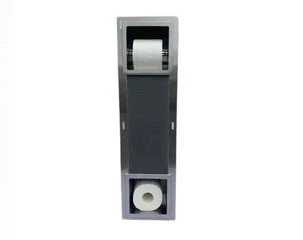
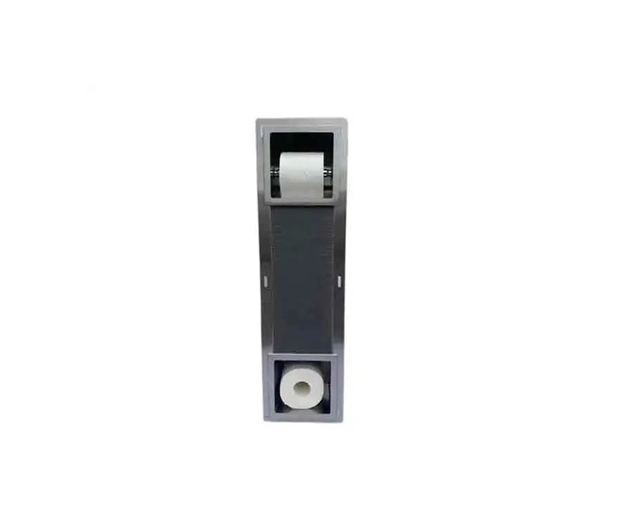
A modern toilet paper holder is no longer just a roll bracket. Multipurpose designs that integrate a shelf, support double-roll capacity, or provide a cleaner mounting profile are replacing basic hardware across new builds, renovations, and brand rollouts. For properties standardizing across room counts or matching a signature bathroom aesthetic, a custom toilet paper holder matched to finish, wall conditions, and guest-experience requirements delivers measurable operational value—not just a visual upgrade.
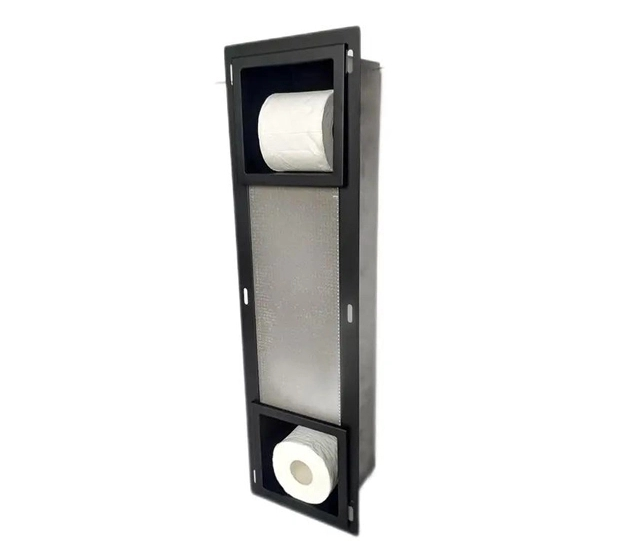
The most common guest complaint about basic toilet paper holders is not aesthetic—it is functional: the roll wobbles, drops, or unwinds excessively. These failures trace back to spindle and arm design tolerances that are acceptable in a residential context but inadequate for the daily use intensity of a hotel bathroom.
Hotel-grade multipurpose holders address this through:
Tighter spindle tolerances: the roll sits securely without lateral movement that causes wobble and noise
Arm geometry that prevents drop: the roll cannot fall off the holder during normal use, which eliminates a common housekeeping interruption
Controlled unwinding: the spindle resistance is calibrated to prevent the roll from free-spinning and creating paper waste on the floor
The single most consistent guest behavior in a hotel bathroom is placing a phone on the toilet tank or the floor because there is nowhere else to put it. A toilet paper holder with an integrated shelf—sized to hold a phone, key card, or small personal item—solves this without adding a separate fixture, without cluttering the vanity, and without requiring additional wall penetrations.
This is the feature that generates the most positive guest feedback in properties that have made the switch: not the finish, not the double-roll capacity, but the shelf.
Multipurpose toilet paper holders designed for hotel use typically feature smoother surfaces, fewer crevices, and concealed fasteners that reduce the areas where moisture, soap residue, and cleaning product accumulate. This makes housekeeping wipe-down faster and more consistent—and reduces the visual deterioration that makes fixtures look dirty even after cleaning.
Rattling bathroom hardware is a guest complaint that appears in reviews more often than most operators expect. Tighter tolerances, better mounting hardware, and solid-backing installation requirements in hotel-grade fixtures eliminate the rattle that develops in basic holders as wall anchors loosen over time.
Specifying a custom toilet paper holder for a hotel property without confirming material, finish durability, and mounting requirements produces the most common procurement failure in this category: fixtures that look correct in a product photo but corrode, loosen, or chip within the first year of operation.
| Material | Application |
|---|---|
| 304 stainless steel | Standard choice for high-humidity environments; good corrosion resistance; suitable for most hotel tiers |
| 316 stainless steel | Coastal and beachfront properties with salt air exposure; higher corrosion resistance |
| Zinc alloy | Cost-effective for interior rooms with controlled humidity; confirm coating quality |
| Brass | Premium tier; excellent corrosion resistance; heavier feel that communicates quality |
For hotel applications, confirm that the fasteners and anchors are the same material grade as the fixture body—corrosion at the fastener is the most common failure mode in bathroom hardware, and it is invisible until the fixture begins to loosen.
| Finish | Characteristics |
|---|---|
| Brushed nickel | Hides fingerprints well; neutral tone; works across most bathroom color schemes |
| Polished chrome | High-visibility shine; shows fingerprints; requires more frequent cleaning |
| Matte black | Strong design statement; popular in contemporary and boutique properties; confirm coating durability |
| Brushed gold / PVD | Premium tier; confirm PVD coating thickness for durability in cleaning chemical exposure |
| Brushed stainless | Clean, modern look; durable; suitable for high-traffic properties |
For brand rollouts across multiple properties, finish consistency across batches is a procurement requirement—confirm the manufacturer's color and finish control process before placing volume orders.
Shelf/ledge size: confirm the shelf depth accommodates a standard smartphone (minimum 75mm depth); confirm load rating against realistic guest use (not just the paper roll weight)
Double-roll capacity: reduces housekeeping interruption frequency; specify for high-occupancy rooms and suites
Reversible orientation: left-right reversible mounting simplifies installation across rooms with different toilet/vanity layouts
Anti-theft spindle: for properties with a history of roll theft; the spindle requires a tool to remove
Wall type: tile, drywall, or concrete—each requires different drill bits, anchors, and installation technique; confirm the fixture's mounting hardware is appropriate for the wall substrate in your rooms
Load rating for shelf use: specify a minimum load rating that accounts for guest behavior—a phone plus a drink plus a small bag is a realistic load scenario, not just the paper roll
Concealed vs exposed fasteners: concealed fasteners improve aesthetics and reduce cleaning time; confirm the installation method is compatible with your maintenance team's tools and skills
Standardizing a single toilet paper holder specification across hundreds of rooms in a new build or brand rollout delivers three operational benefits: consistent guest experience across all room types, simplified maintenance (one part number, one installation method, one spare parts stock), and volume pricing from a single supplier.
Priority specification: finish consistency across batches, mounting hardware appropriate for the wall substrate, and a shelf size that works across all room layouts in the property.
A toilet paper holder replacement is one of the highest guest-perceived-value upgrades per dollar spent in a bathroom renovation. Guests notice the fixture directly—they interact with it on every visit—and a modern multipurpose design signals a quality upgrade even when the rest of the bathroom is unchanged.
Priority specification: finish match to existing hardware (towel bars, faucet, shower set); mounting compatibility with existing wall penetrations where possible to minimize tile repair.
Beachfront resorts, spa properties, and pool-adjacent bathrooms require corrosion-resistant materials and coatings that maintain their appearance under continuous humidity and cleaning chemical exposure. A custom toilet paper holder specified for these conditions—316 stainless or brass with appropriate coating—eliminates the rust staining and finish deterioration that generates maintenance calls and negative guest impressions in standard fixtures.
Priority specification: material grade appropriate for salt air or high-humidity exposure; coating durability confirmed against the cleaning chemicals used by the housekeeping team.
Accessible bathroom layouts have specific requirements for fixture placement, reach range, and usability that standard holders may not meet. A custom toilet paper holder specified for accessible rooms can be configured for the correct mounting height, reach distance, and one-hand operation that reduces guest complaints and supports compliance outcomes.
| Problem | How Multipurpose Holder Addresses It |
|---|---|
| Loose mounts and wobble | Better mounting hardware and solid-backing installation requirements |
| Rust stains on tile | Correct material grade and fastener specification |
| Chipped or peeling finish | Durable coating specified against cleaning chemical exposure |
| Housekeeping time loss | Smoother surfaces, fewer crevices, faster wipe-down |
| "No place to put phone" complaints | Integrated shelf sized for smartphone |
| Frequent roll replacement interruptions | Double-roll capacity option |
Confirm paper format: standard roll vs jumbo roll; confirm core size compatibility with the holder's spindle diameter—a mismatch discovered after installation requires a return
Confirm room layout: mounting position relative to toilet, reach distance, door swing clearance, and proximity to vanity; measure before specifying, not after
Decide multipurpose function: shelf size and load rating, double-roll or single, anti-theft spindle if required
Match finish to existing hardware: bring a sample of the existing towel bar or faucet finish to compare against the holder finish before ordering at volume
Pilot in one to two rooms: collect housekeeping feedback on cleaning ease and installation quality; collect guest usability feedback before full rollout
Tile wall installation is the most common failure point for bathroom hardware in hotels:
Drill bit selection: use a diamond-tipped or carbide tile drill bit; standard masonry bits crack tile and create a poor anchor base
Anchor selection: confirm the anchor type against the substrate behind the tile (drywall, concrete block, or solid concrete); the anchor must engage the substrate, not just the tile
Level mounting: use a spirit level; a visibly unlevel holder generates guest complaints and housekeeping feedback immediately
Solid backing verification: for shelf-equipped holders with load-bearing requirements, confirm solid backing or use appropriate toggle anchors rated for the load
Sealant: apply appropriate sealant around the mounting plate where required to protect wall integrity from moisture ingress at the penetration
A toilet paper holder that is correctly specified and installed requires minimal maintenance—but the maintenance it does require must be done correctly to prevent accelerated deterioration:
Cleaning chemical compatibility: confirm that the housekeeping team's standard cleaning products are compatible with the fixture's finish; abrasive pads and bleach-based cleaners damage coated finishes and accelerate corrosion at fasteners
Periodic tightening: establish a quarterly check of mounting screw tightness; a loose mount that is caught early requires a screwdriver; one that is left until the fixture wobbles may require anchor replacement and tile repair
Finish care: wipe dry after cleaning to prevent water spotting on polished and brushed finishes; this is a 10-second step that significantly extends the finish's appearance life
| Failure Mode | Design Prevention |
|---|---|
| Finish wear at touch points | Specify durable coating; confirm against cleaning chemical exposure |
| Corrosion at fasteners | Specify fastener material to match fixture body grade |
| Loose mount over time | Solid backing installation; correct anchor for substrate |
| Shelf bending under load | Confirm load rating against realistic guest use scenario |
| TCO Factor | Basic Holder | Hotel-Grade Multipurpose Holder |
|---|---|---|
| Unit cost | Lower | Modest premium |
| Maintenance calls per 100 rooms/year | Higher: loose mounts, rust, finish failure | Lower: correct specification reduces failure frequency |
| Housekeeping time per room turn | Longer: crevices, rough surfaces | Shorter: smooth surfaces, fewer accumulation points |
| Replacement frequency | Higher: finish and mount failures | Lower: durable specification extends service life |
| Guest complaint rate | Higher: wobble, rust, no shelf | Lower: stable, clean, functional |
KPIs to track after upgrading:
Hardware-related guest complaints per 100 room-nights (before and after)
Monthly fixture replacements per 100 rooms
Average maintenance time per hardware ticket
Housekeeping time per bathroom turn (measured during pilot)
Modern hotels are moving beyond the basic roll bracket because bathroom hardware is one of the fastest ways to signal quality—and one of the most frequent sources of small but costly maintenance issues. A properly specified multipurpose toilet paper holder—especially a custom toilet paper holder matched to your finish standard, wall conditions, and guest-experience requirements—reduces complaints, speeds up housekeeping, and lowers replacement rates across the property.
The specification work that makes this reliable happens before the first fixture is installed: confirmed material grade for the humidity environment, finish matched to existing hardware, mounting hardware appropriate for the wall substrate, and a pilot in one or two rooms before full rollout.
Visit the product page and submit your details to receive a recommended specification and quotation:
To receive an accurate recommendation, submit the following:
Work conditions: bathroom humidity level, coastal or chemical exposure, wall type (tile/drywall/concrete)
Quantity: rooms per property, rollout schedule, spares plan
Size and spec: roll type (standard or jumbo), shelf size, single or double roll, finish color, mounting method
Target metrics: load rating requirement, corrosion resistance target, expected service life, complaint reduction goal
Current problems: loose mounts, rust staining, finish peeling, no shelf space, frequent replacements
Q1: What is a toilet paper holder?
A toilet paper holder is a bathroom fixture designed to hold and dispense toilet tissue rolls. Modern hotel-grade versions extend beyond the basic roll bracket to include integrated shelves for guest convenience, double-roll capacity to reduce housekeeping interruption frequency, concealed mounting hardware for a cleaner aesthetic, and durable finishes and materials that resist the humidity, cleaning chemicals, and daily use intensity of a hotel bathroom environment.
Q2: How does a multipurpose holder compare to standard holders or recessed dispensers?
Multipurpose toilet paper holders add usable shelf space and typically improve stability and cleaning ease compared to standard single-function holders. Standard holders are lower cost but communicate less quality and generate more maintenance calls from loose mounts and finish deterioration. Recessed dispensers provide a very clean aesthetic but require wall modification during installation, are difficult to retrofit into existing bathrooms without tile repair, and limit the finish and feature options available. For most hotel renovation and rollout applications, a wall-mounted multipurpose holder provides the best balance of guest experience, installation simplicity, and maintenance performance.
Q3: What ROI can hotels expect from upgrading toilet paper holders?
ROI from upgrading to hotel-grade multipurpose toilet paper holders is driven by three measurable factors: fewer maintenance work orders (loose mounts, rust, and finish failures generate maintenance calls that cost significantly more in labor than the fixture cost difference), faster housekeeping workflows (smoother surfaces and fewer crevices reduce cleaning time per room turn), and reduced guest complaint frequency (stable, functional, shelf-equipped holders generate fewer negative mentions in reviews). Track hardware-related guest complaints per 100 room-nights and monthly fixture replacements per 100 rooms before and after the upgrade to quantify the ROI on your property.
Q4: Do we need to remodel bathrooms to switch to multipurpose holders?
No remodeling is required in most cases. Wall-mounted toilet paper holders are retrofit-friendly: the main constraints are existing hole patterns in the tile (which may or may not align with the new fixture's mounting plate), wall substrate strength for the anchor type required, and clearance around the toilet and vanity for the new fixture's dimensions. A pilot installation in one or two rooms before full rollout confirms compatibility with your specific wall conditions and identifies any installation adjustments needed before the full property rollout.
Q5: What parameters should we provide for correct selection and quoting?
To receive an accurate recommendation and quotation for a custom toilet paper holder, provide: roll type and size (standard or jumbo, core diameter), desired functions (shelf size and load rating, single or double roll, anti-theft spindle), finish requirements and existing hardware finish for matching, wall type and substrate (tile over drywall, tile over concrete block, or solid concrete), room count and rollout schedule, spare parts requirements, and the specific problems you want to eliminate (loose mounts, rust staining, finish peeling, guest complaints about no shelf space, or frequent replacements).